Please Wait a Moment
X

Infor LX Tips, Infor LN Tips, BPCS Tips, Baan Tips, Infor M3 Tips & Infor ERP News

Crossroads Connections

Infor ERP Tips & News from the Experts

Infor LX | Infor LN | BPCS | Baan | Infor M3

BPCS/LX Tip of the Week: Purchase Order “In Use” Reset Feature 8.3.5

Anthony Etzel 0 45085 Article rating: No rating


This new feature provides the ability to resolve or reset a purchase order or requisition that is no longer being processed, but the system still indicates it is ‘in use’. We all remember those situations where we could never figure out how the order got hung up.

What we previously had to do was run a behind the scenes script to reset the flag so the order was again accessible. This enhancement provides the ability to resolve the issue and resume processes quickly.

This option is now on the PUR menu, and the user can select the Purchase Order/Requisition in Use Maintenance, PUR940D. The user then enters an order or requisition to remove the “In Use” status.


Optimize Your Manufacturing Today!

Baan/LN Tip of the Week: Advantages / Disadvantages of Virtualization

Kathy Barthelt 0 174071 Article rating: 5.0

I know a lot of our customers are considering virtualization projects. I came across this, and thought it might be useful:

The advantages of virtualization include the following:

• You get more out of your existing resources. Pool common infrastructure resources and break the legacy “one application to one server” model with server consolidation.

• You can reduce datacenter costs by reducing your physical infrastructure and improving your server to admin ratio. Fewer servers and related IT hardware means reduced real estate and reduced power and cooling requirements. With better management tools, you can improve your server to admin ratio so personnel requirements are reduced.

• You can increase the availability of hardware and applications for improved business continuity.

• Securely back up and migrate entire virtual environments with no service interruptions. Eliminate planned downtime and recover immediately from unplanned issues.


• Gain operational flexibility. Respond to market changes with dynamic resource management, faster server provisioning, and improved application deployment.

The disadvantages of virtualization include the following:

• Virtualization adds overhead to the CPU, memory, IO, and network.

• Virtualization adds an additional layer to the hardware and software stack. Therefore, additional complexity is introduced in the following circumstances:

  • When sizing the physical server.
  • When planning VM capacity.
  • When planning multiple VMs on the same physical server.
  • When investigating performance issues.


Baan/LN Tip of the Week: Setting Up Interest Invoicing

Kathy Barthelt 0 112172 Article rating: No rating

You can set up interest invoicing in Accounts Receivable and in the General Ledger.

To set up interest invoicing, use these sessions:

Invoice-to Business Partner (tccom4112s000)
For invoice-to business partners for which you want to raise interest invoices, select the Charge Interest checkbox.

Mapping Scheme (tfgld4573m000)
Use this session to define the mapping of the Interest Invoice / Revenues Analysis integration document type.

Interest Percentages (tfacr5102m000)
Use this session to define the interest percentages for each financial business-partner group, and for different periods of days.

Interest Invoice Related Data (tfacr5101s000)
Use this session to define whether interest must be calculated on unpaid invoices, partly paid invoices, interest invoices, and/or fully paid invoices. You can also indicate that LN must take advance payments, unallocated payments, and credit notes into account for the generation of interest invoices.

Optionally, set conditions
Example: LN only generates an interest invoice advice entry if these conditions are met: The total of all advice entries in one currency is higher than the allowed minimum amount of an interest invoice defined in the Minimum Amount for Interest Invoice field.

The invoice is overdue for a greater number of days than the number of days defined in the Minimum Days for Interest Invoice field.

FSB North America Streamlines Their Shipping on Infor LN with RMCship

Kathy Barthelt 0 25039 Article rating: 5.0

FSB North America, a leading producer of high quality electrified and mechanical locking devices, has selected the RMCship solution from Crossroads RMC to streamline their shipping process on Infor LN and the integration with FedEx® and UPS Worldship™. Using Web Collect formerly RMCship for shipping increases accuracy by eliminating manual steps, streamlines operations, and process steps, and improves customer satisfaction.

BPCS/LX Tip of the Week: Vendor Evaluation

Anthony Etzel 0 45434 Article rating: No rating

Want to ensure that you have the materials you need when you need them?Want to gain insight into your ability to fulfill current and future orders timely? 

Consider implementing a method of evaluating your suppliers. A good understanding of your suppliers’ capabilities and past performance allows you to better plan and deliver orders on time to your customers. 

Some ERP systems have built in features to track supplier performance data. Reports can also be written to gather the information you need.  By whatever means you can achieve it, getting those results could be eye opening and very meaningful to your business.

Baan/LN Tip of the Week: Vendor Evaluation

Kathy Barthelt 0 82801 Article rating: No rating

Want to ensure that you have the materials you need when you need them?

Want to gain insight into your ability to fulfill current and future orders timely? 

Consider implementing a method of evaluating your suppliers. A good understanding of your suppliers’ capabilities and past performance allows you to better plan and deliver orders on time to your customers. 

Some ERP systems have built in features to track supplier performance data. Reports can also be written to gather the information you need.  By whatever means you can achieve it, getting those results could be eye opening and very meaningful to your business.

BPCS/LX Tip of the Week: Transactions

Anthony Etzel 0 48872 Article rating: No rating

If you opt to summarize transactions, do so after a period of testing so that you can be certain that all models and aliases are working to your satisfaction. When you summarize, consider ‘Summary with Detail’ because this retains the detail transactions in GLH.

First96979899101103104105Last

Tips:  LX | BPCS | M3

Tips: LN | Baan

Kathy Barthelt

Infor LN & Baan Tips & Tricks for EXECUTIVES

TECHNOLOGY: Using the Data Access Layer (DAL)

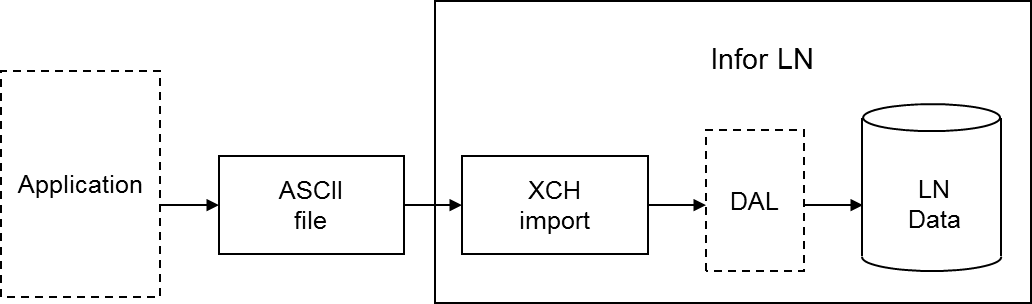
During an Exchange import, you can use all the functionality programmed into the Data Access Layer (DAL). If you use the DAL, Exchange carries out all the constraint checks, integrity checks, and side effects, for example, updates on other tables, that are programmed into the DAL. Database integrity is guaranteed automatically.

Using the DAL reduces the costs of interface development. You can use the DAL to import standard interfaces developed by Infor for partner products, as well as for specific interfaces built by customers, for example, to integrate LN with legacy systems. You can use the DAL in both single site and multisite environments.

The checks or additional actions specified in the DAL are carried out for each row that is imported. Database errors are logged in the same way for DAL and non-DAL import. DAL hook errors are also logged. You can specify whether the DAL property checks are or are not carried out.

If you specify the use of the DAL for a table relation for an import, the dal.new, dal.update, and dal.destroy functions are used instead of db.insert, db.update, and db.delete. You can choose to use DAL for particular tables and not for other tables, therefore, an import batch can contain both types of table relations simultaneously. The import through DAL works for both the import based on audit or indicators (inserts, updates, deletes), and the full import (inserts only).

DAL settings are run time aspects, which means you can change these aspects without having to regenerate the import program. DAL settings are also logged in the log table at batch line level, to enable you to find out what the DAL settings were when the import was run.

Important to realize is that an update through the DAL can result in a number of side effects. Actions performed by the DAL must not be carried out twice. For example, if the DAL updates the available to promise (ATP) quantity for an item when importing order data, the ATP quantity must not be updated in a condition script as well.

For this reason, you must not add any actions in condition scripts, or import additional data, that are already handled in the DAL.
FINANCE: Set Up and Calculate Currency Differences

To set up and calculate currency differences for foreign currencies:

  • Use the Company Parameters (tfgld0503m000) session to specify the profit and loss ledger accounts, 12 profit and loss dimensions, and transaction type for a posting exchange rate differences that is calculated using the FIFO method. To specify this data, use the Currency Diff. FIFO tab. The reports printed from the Print Company Parameters (tfgld0404m000) session, include the Currency Differences FIFO fields.
  • Use the Calculate Currency Differences (tfgld5201m000) session to calculate the currency differences resulting from transactions posted on accounts for which the field Currency Analysis in the session Chart of Accounts (tfgld0508m000) is set to Required.

OPERATIONS: Subcontracting Overview

Companies can decide to involve a subcontractor and subcontract part of their activities. The subcontractor carries out the work and returns the products to your company.

In Infor LN, subcontracting is considered as purchasing labor from a third party. Therefore, if a manufacturer wants to subcontract work, he must generate a purchase order to start the subcontracting process. These are the types of subcontracting:

  • Subcontracting with material flow
    • Operation subcontracting: For operation subcontracting, a part of the production process (one or more operations) is subcontracted.
    • Item subcontracting: For item subcontracting, an item's entire production process is subcontracted. Therefore, it is always used with material flow support.
  • Subcontracting without material flow: The simplest form of subcontracting is to generate a subcontracting purchase order to record the operations outsourced to a subcontractor. The subcontracting purchase order only represents the administrative handling of the subcontracting process. When the subcontracted item is received back from the subcontractor, you must close the subcontracting purchase order, which initiates the production process.
  • Unplanned subcontracting: Unplanned subcontracting is applicable when you subcontract after generating a production order. For unplanned subcontracting, a purchase order is generated from the production order and the material supply lines are populated by Shop Floor Control.
  • Service subcontracting: For service subcontracting, work on an item to be maintained or repaired is subcontracted. This work entails the entire repair process, or only a part of it. Service subcontracting can be used with or without material flow support.

To start the subcontracting process, a purchase order is required.

Previous Article Infor LN & Baan Tips & Tricks for FINANCE: Moving calendar periods
Next Article Infor LN & Baan Tips & Tricks for TECHNOLOGY: Using the Data Access Layer (DAL)
Print
2180 Rate this article:
5.0
Kathy Barthelt

Kathy BartheltKathy Barthelt

Other posts by Kathy Barthelt

Contact author

x

Categories