Please Wait a Moment
X

Infor LX Tips, Infor LN Tips, BPCS Tips, Baan Tips, Infor M3 Tips & Infor ERP News

Crossroads Connections

Infor ERP Tips & News from the Experts

Infor LX | Infor LN | BPCS | Baan | Infor M3

Baan/LN Tip of the Week: 5 Ways to Motivate Your Employees

Kathy Barthelt 0 83169 Article rating: No rating

Here are 5 ways you can motivate your employees to give their best every day:

1. Train Your Employees

2. Give Your Employees the Right Tools

3. Automate Processes

4. Give Your Employees Real-Time Feedback

5. Provide Incentives to Do More

Optimize Your Manufacturing Today!

BPCS/LX Tip of the Week: Multi-level Shop Order Release Due Dates

Anthony Etzel 0 56717 Article rating: 5.0

Previously, Material Requirements Planning (MRP) preferred practices meant that the component’s due date was the same as the parent’s shop order release date. Because MRP trends have changed, the preference for this due date is the day before the release date of the parent. Although Infor LX already has this functionality in Shop Order Maintenance programs (SFC500), users could not change how due dates were determined for lower level shop orders in Multi-Level Shop Order Release, SFC530D.

This enhancement provides an additional parameter for Multi-Level Shop Order Release. This parameter allows the user to change how the due date of the child components is determined. The user is now able change how the due date is determined for multi-level shop orders. If the Due Date of Children parameter is set to 1=Yes, the due date of the child components is the same as the release date of the parent. If the parameter is set to 0=No, the due date is the day before the release date of the parent.

Optimize Your Manufacturing Today!

Baan/LN Tip of the Week: How is Your Productivity?

Kathy Barthelt 0 82085 Article rating: No rating

Are your employees not as productive as you’d like them to be? Are jobs not getting completed on schedule? 

Without actual data, making decisions about how efficient your operation is will be difficult. Start tracking actual time to complete each operation. Compare different production lines running the same job. Is one line running more efficiently? If so, start looking at why. Track downtime, setup, etc. Once you start really analyzing each piece of the puzzle, you can begin to uncover areas that are ripe for improvement.

Optimize Your Manufacturing Today!

Tip of the Week: Create a Repeatable Process

Kathy Barthelt 0 101357 Article rating: No rating

If you’ve been successful doing something in the past, you want to keep doing it that way. Are your procedures documented? Do you have workflows defined? Would creating video tutorials be helpful, especially for new employees? Giving employees the tools to be successful helps to ensure the success of the business as a whole.

Optimize Your Manufacturing Today!

BPCS/LX Tip of the Week: 6 Powerful Steps to Win With Automation

Anthony Etzel 0 55466 Article rating: 5.0
  1. Eliminate paper shop packet and distribution of the paperwork to the shop floor.     
  2. Eliminate manual (paper-based) recording activities and the need to key in the transactions.
  3. Easy electronic scheduling by sequence and changing job priorities.
  4. Evaluate differences using actual times compared to standards.
  5. Improve data accuracy and eliminate the need to chase and fix errors.
  6. Practice Real-Time data reporting to monitor efficiencies and identify problems as they occur.

Optimize Your Manufacturing Today!

Baan/LN Tip of the Week: 6 Powerful Steps to Win With Automation

Kathy Barthelt 0 83594 Article rating: No rating
  1. Eliminate paper shop packet and distribution of the paperwork to the shop floor.    
  2. Eliminate manual (paper-based) recording activities and the need to key in the transactions.
  3. Easy electronic scheduling by sequence and changing job priorities.
  4. Evaluate differences using actual times compared to standards.
  5. Improve data accuracy and eliminate the need to chase and fix errors.
  6. Practice Real-Time data reporting to monitor efficiencies and identify problems as they occur.

Optimize Your Manufacturing Today!

Baan/LN Tip of the Week: Purchase Inquiry

Kathy Barthelt 0 77166 Article rating: No rating

In Baan IV Purchase Control, the purchase inquiry procedure enables user to:

  • Request a specific supplier to submit a quotation on the purchase inquiry for the delivery of an item.
  • Compare the prices and discounts of the quotations that are submitted by different suppliers.
  • Copy the inquiry data to a purchase order.

In LN, you can:

  • Request multiple business partners to submit a quotation on a specific request-for-quotation for the delivery of an item.
  • Compare the received quotations based on the following criteria:
    1. Price
    2. Quantity
    3. Vendor rating
    4. Delivery dates
    5. RFQ subjective criteria
  • Copy the quotation data to a purchase order, a purchase contract, or a price book.

Optimize Your Manufacturing Today!

BPCS/LX Tip of the Week: Using Pre-Assigned Lot Numbers

Anthony Etzel 0 46562 Article rating: 5.0

Some items in the manufacturing process may require a lot number. A quick and easy way to release the Shop Orders with lot numbers is by using the Multi-Level Shop Order Release.

Simply select the end item from the selection screen and use action 10 for the multi-level order release. At the bottom of the release screen is the field “Pre-Assign a Lot Number to Shop Orders”. Select 1 for the pre-assigned lot number assignment option.

This option will use the pre-assigned lot number on the shop order, if the lot number exists. If the lot number does not exist, the system will automatically create a lot number and assign it to the shop order for all items that are lot-controlled.

Optimize Your Manufacturing Today!

First8788899092949596Last

Tips:  LX | BPCS | M3

Tips: LN | Baan

Kathy Barthelt

Infor LN & Baan Tips & Tricks for EXECUTIVES

TECHNOLOGY: Using the Data Access Layer (DAL)

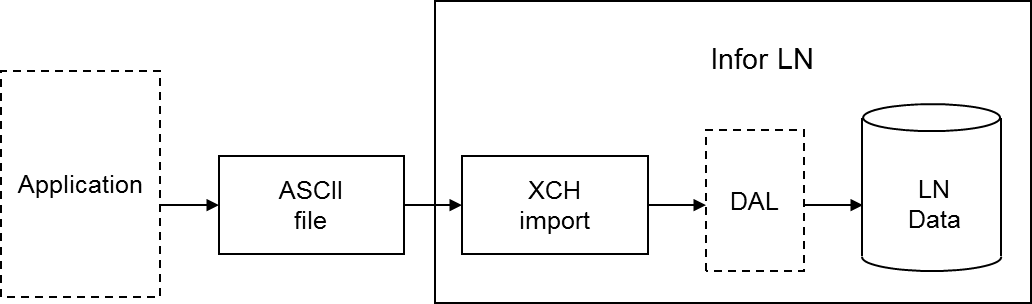
During an Exchange import, you can use all the functionality programmed into the Data Access Layer (DAL). If you use the DAL, Exchange carries out all the constraint checks, integrity checks, and side effects, for example, updates on other tables, that are programmed into the DAL. Database integrity is guaranteed automatically.

Using the DAL reduces the costs of interface development. You can use the DAL to import standard interfaces developed by Infor for partner products, as well as for specific interfaces built by customers, for example, to integrate LN with legacy systems. You can use the DAL in both single site and multisite environments.

The checks or additional actions specified in the DAL are carried out for each row that is imported. Database errors are logged in the same way for DAL and non-DAL import. DAL hook errors are also logged. You can specify whether the DAL property checks are or are not carried out.

If you specify the use of the DAL for a table relation for an import, the dal.new, dal.update, and dal.destroy functions are used instead of db.insert, db.update, and db.delete. You can choose to use DAL for particular tables and not for other tables, therefore, an import batch can contain both types of table relations simultaneously. The import through DAL works for both the import based on audit or indicators (inserts, updates, deletes), and the full import (inserts only).

DAL settings are run time aspects, which means you can change these aspects without having to regenerate the import program. DAL settings are also logged in the log table at batch line level, to enable you to find out what the DAL settings were when the import was run.

Important to realize is that an update through the DAL can result in a number of side effects. Actions performed by the DAL must not be carried out twice. For example, if the DAL updates the available to promise (ATP) quantity for an item when importing order data, the ATP quantity must not be updated in a condition script as well.

For this reason, you must not add any actions in condition scripts, or import additional data, that are already handled in the DAL.
FINANCE: Set Up and Calculate Currency Differences

To set up and calculate currency differences for foreign currencies:

  • Use the Company Parameters (tfgld0503m000) session to specify the profit and loss ledger accounts, 12 profit and loss dimensions, and transaction type for a posting exchange rate differences that is calculated using the FIFO method. To specify this data, use the Currency Diff. FIFO tab. The reports printed from the Print Company Parameters (tfgld0404m000) session, include the Currency Differences FIFO fields.
  • Use the Calculate Currency Differences (tfgld5201m000) session to calculate the currency differences resulting from transactions posted on accounts for which the field Currency Analysis in the session Chart of Accounts (tfgld0508m000) is set to Required.

OPERATIONS: Subcontracting Overview

Companies can decide to involve a subcontractor and subcontract part of their activities. The subcontractor carries out the work and returns the products to your company.

In Infor LN, subcontracting is considered as purchasing labor from a third party. Therefore, if a manufacturer wants to subcontract work, he must generate a purchase order to start the subcontracting process. These are the types of subcontracting:

  • Subcontracting with material flow
    • Operation subcontracting: For operation subcontracting, a part of the production process (one or more operations) is subcontracted.
    • Item subcontracting: For item subcontracting, an item's entire production process is subcontracted. Therefore, it is always used with material flow support.
  • Subcontracting without material flow: The simplest form of subcontracting is to generate a subcontracting purchase order to record the operations outsourced to a subcontractor. The subcontracting purchase order only represents the administrative handling of the subcontracting process. When the subcontracted item is received back from the subcontractor, you must close the subcontracting purchase order, which initiates the production process.
  • Unplanned subcontracting: Unplanned subcontracting is applicable when you subcontract after generating a production order. For unplanned subcontracting, a purchase order is generated from the production order and the material supply lines are populated by Shop Floor Control.
  • Service subcontracting: For service subcontracting, work on an item to be maintained or repaired is subcontracted. This work entails the entire repair process, or only a part of it. Service subcontracting can be used with or without material flow support.

To start the subcontracting process, a purchase order is required.

Previous Article Infor LN & Baan Tips & Tricks for FINANCE: Moving calendar periods
Next Article Infor LN & Baan Tips & Tricks for TECHNOLOGY: Using the Data Access Layer (DAL)
Print
2189 Rate this article:
5.0
Kathy Barthelt

Kathy BartheltKathy Barthelt

Other posts by Kathy Barthelt

Contact author

x

Categories